Accredited IT Diploma

This Cloud Computing course is eligible for Government Subsidy under QLD Career Boost program.

Current Enrolment Period Closes: 15th of April 2026

Cloud Engineer/Architect Courses Queensland

ICT50220 Diploma of Information Technology
(Cloud Engineer) & (Cloud Architect)

Study the ICT50220 Diploma of Information Technology Course and learn coding. This is a software development course, teaching you the skills required to work in software developer/engineering, website development and AI programming.
Grace and Bella, Teacher and student learning Cyber security
The Queensland Government have subsidised this Coding course fee cost through their Skills Assure program. Eligible Queensland students may enrol into the ICT50220 Diploma of Information Technology course through the Career Boost Funding Program.

Eligible students will pay a maximum of
$1,490 (Non-Concession) or $371 (Concession) in course fees in 2025.

Pay the course fee in Weekly Installments of
$46.50 (Non-Concession) or $11.50 (Concession).
Course Description
The ICT50220 Diploma of Information Technology (Cloud Engineer) & (Cloud Architect) is an Australian nationally recognised course. This is a cloud computing course teaching the practical skills of cloud computing to work in the Cloud IT Services.

Subjects:
1. Operating Systems and Virtualisation
2.
Cloud Networking
3.
Cloud Architecture
4.
Webscale and Hosting
5.
Privacy and Cyber Security
6.
Cloud Operation
Course Details
Delivery: 100% Online Study with a course coach
Level:
Nationally Accredited Diploma Qualification
Enrolment Period:
Closes 15th of April 2026
Fees:
No lump sum payment. Subsidised course fee Paid in weekly Installments. See below to find out if you are eligible for the Queensland Government Funding.

Our course is practical and will teach you real coding skills, relevant to the industry. By the end of this course you will be able to code websites and applications! These skills are highly sought after and our industry research suggests that not many places have the capacity to teach this level of information application. We strive to provide the best quality in all that we deliver.


Course Topics:

  • Cloud Infrastructure & Architecture (EC2, VPC, S3): Design and deploy scalable cloud infrastructure by provisioning virtual servers with EC2, configuring secure private networks with VPC, and managing object storage with S3 for reliable, production-ready environments.
  • Serverless Computing (Lambda, API Gateway, DynamoDB): Build cost-efficient, event-driven applications without managing servers — using Lambda functions triggered by real-world events, API Gateway to expose clean HTTP endpoints, and DynamoDB for fast NoSQL data storage.
  • Identity & Access Management (IAM, Roles, Policies): Secure your cloud environment by creating users, groups, and roles with least-privilege permissions, and applying IAM policies to control who can access which AWS resources and under what conditions.
  • Containerisation & Orchestration (ECS, ECR, Fargate): Package and deploy applications in containers using Docker, push images to ECR, and run them at scale with ECS and Fargate — eliminating server management while enabling consistent, repeatable deployments.
  • Monitoring & Cost Management (CloudWatch, Billing, Auto Scaling): Maintain visibility into your cloud environment by configuring CloudWatch alarms and dashboards, setting billing alerts, and implementing Auto Scaling policies to optimise performance and control costs.
  • DNS Management & Domain Configuration: Manage domain records, configure authoritative DNS, and understand TTL, A, CNAME, MX, and TXT records to ensure reliable routing of web traffic for websites and applications.
  • Performance Optimisation (CDN, Caching, Page Rules): Accelerate global content delivery by configuring Cloudflare's CDN, setting intelligent caching rules, and using Page Rules to fine-tune how assets are served to users worldwide.
Queensland Government Subsidy

EQC Institute is an approved Skills Assure Supplier (SAS) under the Queensland Government’s Career Boost program. If you are a Queensland resident, an Australian citizen or permanent resident, or other approved category of person, you may be eligible for a subsidised place under the Queensland Government Career Boost program.

What is Career Boost?

Career Boost is designed to do exactly that – give your career a boost. Career Boost aims to take your career to the next level, enabling you to grow and apply your skills to existing or new job roles and to support productivity growth and workplace innovation.

EQC offers a General Training pathway for Career Boost student participants. This means training is open for direct enrolment and you do not need to enter into a training contract with an employer. This training focuses on building priority skill sets. You can access this funding once– for a qualification of your choice and if eligible up to two subsidised skill sets.

Full Course Fee: $5,200
Non-Concession Fee:
$1,490
This fee is paid weekly as $46.50 per week.

Concession Holder Fee:
$371
This fee is paid weekly as $11.50 per week


Eligibility Requirements:
Eligible Students must meet the following criteria:

i. On campus students: 18 years or older. For online students please contact us;
ii. Not be a school student;
iii. Be a permanent Queensland resident;
iv. Be an Australian citizen, or Australian permanent resident (includes humanitarian entrant), or a temporary resident with the right visa and work permits on the pathway to permanent residency, or a New Zealand citizen;
v. Not already have a Certificate IV or higher qualification (including tertiary qualification) completed within the last 10 years (qualifications completed as a school student, and foundation skills qualifications, do not count).
vi. Not be enrolled in any other qualification, whether funded or unfunded, except for foundation skills qualifications.

Not Eligible? Click Here to see our special course offering.

Concession Eligibility:
To be eligible for a concession, you will need to show one of the following:

- You hold a Health Care or Pensioner Concession Card issued under Commonwealth law
- You are the partner or dependent of a person who is entitled to concessions under a Health Care, Veteran or Pensioner Concession Card
- You identify as an Aboriginal or Torres Strait Islander person
- You have a disability
- You are an adult prisoner

Careers in Cloud Computing:

Information Technology is not just an industry. Its a language and foundation that the world of today is built upon. No longer are these skills specialised, they affect the everyday life of every person and the need for people who understand this new foundation is massive. Information Technology effects every business, every industry, every life on this planet. Once you learn the skills the career and life options are endless. Welcome to the building blocks of the future.

Searches from Seek show (as 05/01/26)
Over 2,080 jobs advertised for - Information Technology
Over 1,085 jobs advertised for - Software Developer
Over 2,812 jobs advertised for - IT Support


Searches from Seek show the average annual salary for Software Developer jobs in Australia ranges from $85,000 to $105,000 according to Seek 2026.
Fees and Co-contribution

The Queensland Government contracts approved providers to deliver education and training in key priority areas to Queenslanders. EQC Institute’s ICT50220 Diploma of Information Technology is an approved course and EQC Institute is an approved provider within the Skills Assure Supplier (SAS) network. You can specialise in either back end web development (coding) or cyber security (which also includes business analysis).

What Fees Apply?

If you are eligible for a subsidy, the set subsidy amount will be paid by the Queensland Government upon successful processing of your enrolment. Our friendly team will assist you to determine your eligibility and complete your enrolment as simply as possible.The Queensland Government makes it compulsory for education providers in the Career Boost program in the Diploma of IT, to charge a student fee, which is called the “Co-contribution fee”. This means that all RTOs offering that program under the SAS program, must charge a Co-contribution fee. The Government requires a Co-contribution fee because the increased benefits of advanced-level training, such as improved job opportunities and higher earning potential. The fee represents total costs to the student for the qualification, including materials costs. You will not be charged more for tuition or materials. You could be charged for ad hoc administrative matters requested by you, such as re-issue of a parchment (certificate). That sort of fee is set out in our Administrative Fees Schedule. However, all of your learning materials and tuition are covered by your Co-contribution fee.The Co-contribution fee for non-concessional card holders in Queensland is $1,490 for non-concession applicants and $371 for concession applicants.

How can you pay the Co-contribution fee?

If you think you may be eligible for a funded place, you will need to let us know how you would like to pay your portion of the total fee: up front payment, or payment by instalments (a payment plan). We will never ask you to pay more than 30% of your Co-contribution fee up front. Call us on 1800 338 883 or apply below to see if you are eligible for the subsidy.

What are the course subjects?

1. Operating Systems and Virtualisation
2. Cloud Networking
3. Cloud Architecture
4. Webscale and Hosting
5. Privacy and Cyber Security
6. Cloud Operation

What are the units?

We’ve made your units very easy to study by grouping them under subjects, so you have less doubling up and your study is more efficient  and meaningful. The elective units have been set for you to fit the Back End Web Development Specialisation.

CORE UNITS

BSBCRT512
Originate and develop concepts
BSBXCS402 Promote workplace cyber security awareness and best practices
BSBXTW401
Lead and facilitate a team
ICTICT517 Match ICT needs with the strategic direction of the organisation
ICTICT532 Apply IP, ethics and privacy in ICT environments
ICTSAS527 Manage client problems

ELECTIVE UNITS ICTCLD501 Develop cloud disaster recovery plans
ICTCLD502
Design and implement highly-available cloud infrastructure
ICTCLD503
Implement web-scale cloud infrastructure
ICTCLD504 Improve cloud-based infrastructure
ICTCLD505 Implement cloud infrastructure with code
ICTCLD506
Implement virtual network in cloud environments
ICTCLD507 Build and deploy resources on cloud platforms
ICTCLD508 Manage infrastructure in cloud environments
ICTCYS407 Gather, analyse and interpret threat data
ICTCYS610
Protect critical infrastructure for organisations
ICTCYS613 Utilise design methodologies for security architecture
ICTSAS524 Develop, implement and evaluate an incident response plan
ICTSAS526 Review and update disaster recovery and contingency plans
ICTICT424 Address cyber security requirements
ICTICT426 Identify and evaluate emerging technologies and practices
ICTICT427 Identify, evaluate and apply current industry-specific technologies to meet organisational needs

What kind of work could I do when I graduate?

Australia’s tech industry thrives with endless possibilities for ICT50220 Diploma of Information Technology (Back End Web Development) graduates! Imagine entering a work force that deals with dynamic fields like:

Finance and Insurance:
Crafting secure payment gateways to protect transactions, analyzing real-time market data for investment platforms, and developing fraud-detection algorithms to ensure financial trust.

Education: Building interactive e-learning platforms to enhance student engagement, integrating virtual classroom tools for global access, and optimizing content management systems for educators.

Manufacturing:
Programming automation systems to streamline production lines, designing IoT dashboards for real-time equipment monitoring, and coding supply chain solutions for efficiency.

Telecommunications:
Engineering robust network APIs for 5G connectivity, creating backend systems for seamless video conferencing, and optimizing data routing for global communication.

Data Processing and Hosting:
Managing scalable cloud infrastructures for enterprise solutions, ensuring high-availability data storage, and developing APIs for secure data exchange.

Web and Software Development:
Designing responsive web applications with dynamic functionality, coding user-centric dashboards, and integrating third-party services for innovative software.

Programming and Analytics:
Solving complex data challenges with predictive algorithms, developing analytics pipelines for business insights, and optimizing database queries for performance.

Healthcare:
Creating secure patient record systems for hospitals, integrating APIs for wearable health devices, and analyzing medical data to support precision diagnostics.

Gaming and Entertainment:
Coding server-side logic for multiplayer games, optimizing streaming platforms for low-latency media delivery, and developing APIs for interactive entertainment apps.

Cyber Security:
Building encryption frameworks to protect sensitive data, monitoring real-time threat detection systems, and developing secure authentication protocols for enterprise networks.

Retail and E-Commerce:
Designing dynamic shopping cart systems for seamless transactions, coding AI-driven recommendation engines for personalized shopping, and optimizing backend processes for global marketplaces.

And many more!

Imagine entering fields that architect digital solutions that transform lives! Tech workers are involved in a huge breadth of work across Australia, from revolutionizing healthcare access to powering immersive gaming experiences. Your back end web development skills help fuel innovation,enhance connectivity, and drive progress, positioning you strongly within the ever-evolving tech industry.

Are there any entry requirements?

There are no prior qualifications required before entering this Diploma.

As part of assessing your suitability to study the course, the College will be required to assess your LLND, academic suitability and study load capacity. The College reserves the right to cancel an enrolment application if the suitability requirements are not achieved.

Course Details:
Subjects
7
Delivery
100% Online + Course Coach
Course Fee
$5,220
Subsidised Course Fee
$1,490 (non concession)
$371
(Concession)
Enrolment Period
Closes 15th of April 2026
Nationally Recognised Training Logo
ICT50220
Diploma of Information Technology
Apply Now

Limited Funded Places

Apply to see if you're eligible

Initial Application

Thank you! Your submission has been received!
Oops! Something went wrong while submitting the form.

EQC Institute is a Government Accredited, Registered Training Organisation (RTO) offering Nationally Recognised Qualifications.

RTO Number 45758 | CRICOS #03952E

Our Education Team

EQC trainer - Ashlee
David
Educator
EQC trainer - Jaxon
Jaxon
Educator
EQC trainer - Isabella
Isabella
Educator
EQC Trainer - Harry
Harry
Educator
EQC Trainer - Harry
Miah
Educator

9 Campuses
38 Educators
7 Cities

Google review logo 5 stars from online users
4.9 out of 5
Sam - EQC GraduateEQC graduateEQC graduateEQC graduateEQC graduate
6000+ students educated by founding team
Gradient scribble, graphic decoration

"Recently finished studying a Diploma of Information Technology with EQC and couldn't be more happy with the process. Feel like we were really taught all the necessary information in order to begin a career in the field."

EQC Student
2026

"Great place to learn, great teachers and an encouraging environment that facilitates actual learning unlike large lectures at a major universities."

EQC Graduate
2025

“I really enjoyed my student life with EQC Institute. Thank you so much for providing this opportunity.”

EQC Graduate
2025

University Pathways

Where your learning can take you:
EQC Institute's ICT50220 Diploma of Information Technology qualifies for articulation with credit into a number of university Bachelor programs.
This means our students can progress into approved programs with credit up to 1 year, and in a number of cases direct entry into Year 2 (depending on the university).

Terms and conditions may apply at the relevant university and how to inquire with each university is listed below. Contact us for more information.

EQC and Curtin University Pathway, Showing Curtin University Campus in Perth
Curtin
University

1 year of credit - Start with direct entry into year 2 (eligible bachelor course).

EQC and Uni of Newcastle Pathway, showing University of Newcastle Campus location.
Newcastle
University

1 year of credit - Start with direct entry into year 2 or 70 unit credits (eligible bachelor course)
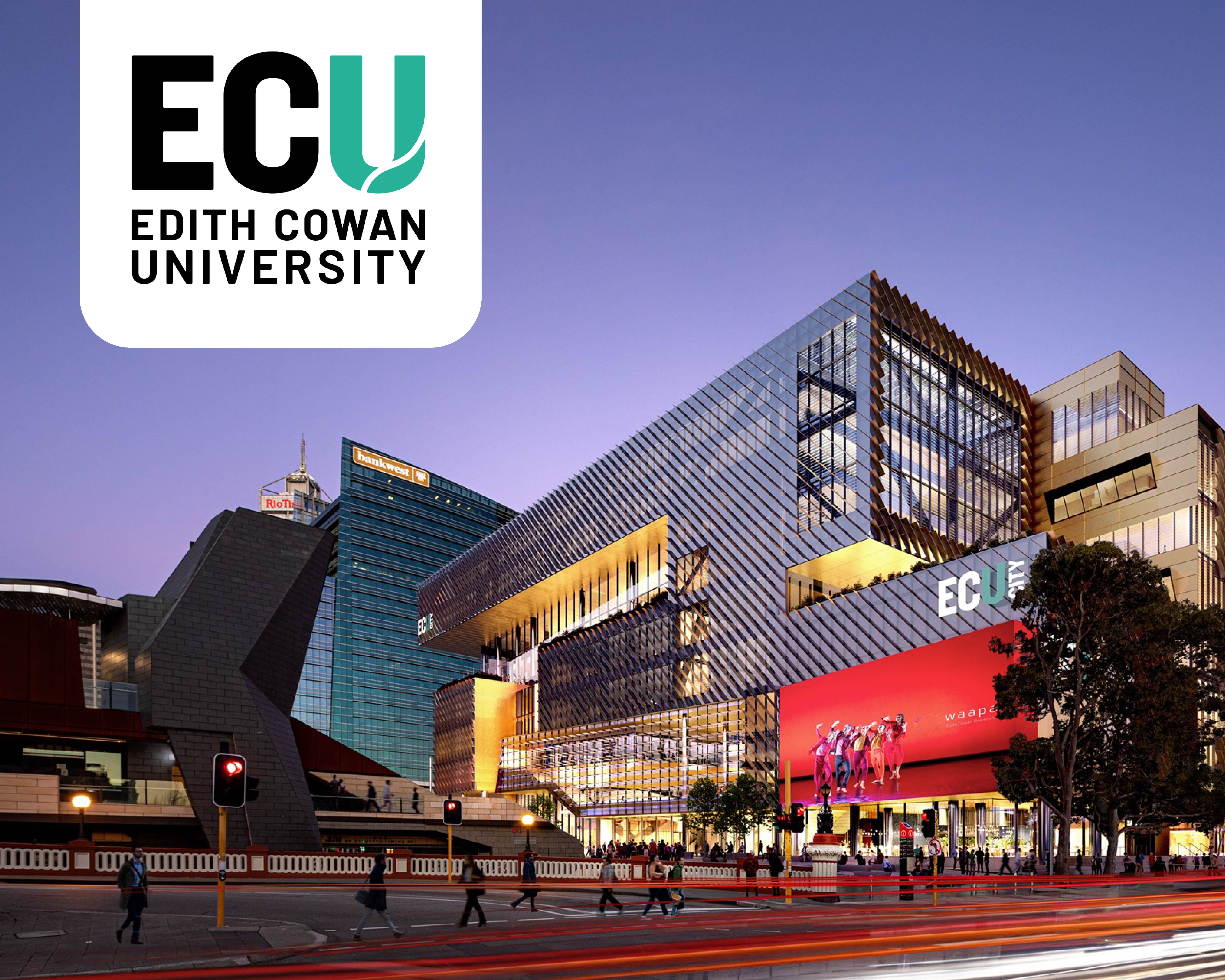
EQC and Editch Cowan University Pathway, Showing campus location.
Edith Cowan
University

1 year of credit - Start with direct entry into year 2 (eligible bachelor course).

EQC and Griffith University Pathway, Showing the Griffith Uni Campus location
Griffith
University

Case by Case basis. We will support you with your application

Practical Cloud
Qualifcation

Completed Fast with no time wasting

Study Cyber Security with the formal qualification - ICT50220 Diploma of Information Technology (Cloud Engineer) & (Cloud Architect).

Apply Now
Excellent 4.9 out of 5
Ryan - Cyber Security Short Course Trainer

“Shout out to my teacher, you know who you are! You're the bees knees”

Tim | EQC Institute Graduate

Alina - EQC Student studying outside with flexibility.

Delivery Locations

Brisbane  
Ipswich
Cairns
Central Queensland
Darling Downs - Maranoa
Gold Coast
Logan - Beaudesert
Mackay - Isaac - Whitsunday
Moreton Bay - North
Moreton Bay - South
Queensland - Outback
Sunshine Coast

Ask a Question

Our team is here to help. We value your time and can answer your questions as fast as looking for the answers.

Phone icon
Mail icon
Location pin icon

Send us a message

Thank you! Your submission has been received!
Oops! Something went wrong while submitting the form.

Be it now
Keep up with future

Our Campus Locations

Not just a building, but a place to learn.

At EQC Institute we appreciate the importance of creating an environment where students can enjoy, prosper and grow together. As such, we have taken a proven by research approach in how we set up every space.


Map of Australia with EQC campuses markers. Campuses are in Sydney, Brisbane, Melbourne, Perth, Adelaide, Newcastle, Launceston and Townsville
Nationally Recognised    Technology
Qualifications
NRT Nationally recognised training icon, EQC institution Accredation
ICT50220 Diploma of Information Technology

EQC Institute is a Government Accredited, Registered Training Organisation (RTO) offering Nationally Recognised Qualifications.

RTO Number 45758 | CRICOS #03952E
Person icon
Lead By
Expert Trainers
Our trainers are real industry professionals who bring practical experience, relatable teaching and a supportive learning environment.
folder icon
Real Skills, Not Just Theory
Learn practical cyber security and business analysis skills that can be applied directly in real-world environments.
Lightbulb icon
Industry Focused Learning
Course content is built around the tools, systems and techniques used in today’s technology workplaces.
Doc icon
Study From Anywhere
Learn from anywhere while working through practical online scenarios based on real industry environments.

Apply here for our Cloud Computing course

Let us know if you are interested in our courses and our team will email you with more information.

Initial Application

Thank you!
Our team will email you your login details to your Cyber Security Short Course!
Oops! Something went wrong while submitting the form.